Silver Rises Over 120% YTD


Published: 10-29-2026, 10:46 am
The World Bank precious metals outlook was announced on October 28, 2026. It projects annual average precious-metal prices about 40% above 2025 levels this year. Prices could ease in 2027 while remaining more than three times their 2015–19 average.
That combination matters for long-term gold and silver owners. Lower prices do not necessarily mean a return to older price levels.
Key takeaways
- The 40% figure compares annual averages; it does not describe further upside from today’s price.
- Prices could fall in 2027 while remaining far above their 2015–19 average.
- The forecast covers a precious-metals group, rather than an individual investor’s return.
What does the World Bank forecast actually measure?
The Bank’s precious-metals group covers gold, silver and platinum. Its October report puts the 2026 index increase at 39.9%. It forecasts an 8.3% decline in 2027. Both figures compare annual averages with the previous year.
These are group projections. Gold and silver have separate forecasts; the 40% figure does not apply equally to each metal. An annual average also differs from a year-end price or a change from today’s spot price.
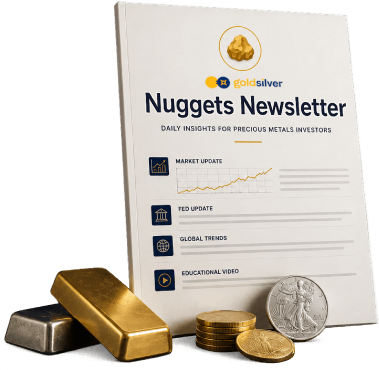
The Edge Every Investor Needs Smarter precious metals investing starts here. The Nuggets Newsletter brings you essential market insights, Fed updates, global trends, educational videos, and much more.
Is easing in 2027 a new prediction?
No. The Bank’s April 28 release forecast about 42% growth in average precious-metal prices for 2026. Our May 14 coverage identified that figure as a full-year-average projection against 2025.
The Bank’s June 26 analysis already anticipated a lower group index in 2027. October therefore refines an existing outlook. The projected 2026 increase is slightly lower than April’s estimate.
How can prices fall and still remain high?
The comparisons use different starting points. The 2027 projection measures the change from 2026’s annual average. The longer comparison measures prices against the average from 2015 through 2019.
A decline from a strong year can therefore leave prices well above that older benchmark. That is the combination the World Bank describes.
However, these forecasts are in nominal U.S. dollars. They do not measure gains after U.S. inflation. Measuring purchasing power requires adjusting for inflation. Nor should the group comparison be applied separately to every gold coin or silver bar.
What could change the 2027 outlook?
Greater geopolitical tension, financial-market volatility and stronger central-bank purchases could support prices. Conversely, higher-than-expected interest rates and a stronger U.S. dollar could weigh on them. For silver, weaker industrial demand is another downside risk.
Faster substitution away from silver in solar applications could also reduce demand. The Bank also identifies easing geopolitical tension as a potential drag on haven buying.
These are possible departures from the baseline forecast. The balance of those risks can change, which is why the outlook remains conditional.
What does this mean for physical gold and silver owners?
For long-term owners, the outlook helps set expectations about price fluctuations. It does not establish a guaranteed price floor.
Your net return depends on purchase and sale prices, premiums, spreads and any ongoing costs. Inflation matters too. A higher nominal price does not automatically mean greater purchasing power. Our review of gold and inflation discusses periods when gold fell short.
Direct ownership of bullion does not depend on an issuer’s promise to repay. However, custody arrangements still matter. LBMA distinguishes allocated metal from an unallocated account claim, which carries credit exposure to the account provider.
Read the World Bank forecast as an outlook for market prices. A long holding period does not eliminate price risk. Nor does a high historical benchmark settle your return after inflation and costs.
Stay On Top of Gold & Silver Prices
Get important market alerts sent straight to your inbox.
SOURCES
1. World Bank Group — Commodity Prices Set to Increase by 23% in 2026 as Global Shocks Mount
2. World Bank — Commodity Markets Outlook, October 2026
3. World Bank Group — Middle East War to Spark Biggest Energy Price Surge in Four Years
4. World Bank Data Blog — Precious metals retreat from record highs
5. Federal Reserve Bank of St. Louis — Adjusting for Inflation
6. CFTC — 10 Things to Ask Before Buying Physical Gold, Silver, or Other Metals
7. LBMA — Precious Metal Accounts
8. GoldSilver — World Bank: Precious Metals to Surge 42% This Year
9. GoldSilver — Gold vs Inflation: What 100 Years of Data Shows
Disclaimer: This article is for informational purposes only and does not constitute investment advice. Past performance is not indicative of future results. Always consult a qualified financial advisor before making investment decisions.
You May Also Like:
- Silver Tests Its 2026 Low Again
- Gold Price Today: Does It Rise or Fall in an AI Stock Selloff?
- Durable Goods Beat: What It Means for Gold Price Today
- Gold Steadies Near $4,000 as Fed Week Begins
- Russia Is Selling Gold: Why That’s Not Bearish
- Gold Silver Ratio Today: Why Silver Is Falling Faster
- Gold Priced in Oil: 38 Barrels an Ounce vs. 67 a Year Ago
- Social Security’s 3.6% Raise Arrives Late by Design
- How Gold’s Correction Impacted Portfolios
- Central Bank Gold Buying: Why 39 Tonnes Matters