Silver Rises Over 120% YTD




Published: 05-08-2026, 05:15 pm
Silver jewelry and silver bullion are not the same investment. Jewelry carries retail markups of 200–300% over the metal’s value — and recovers almost none of that on resale. Bullion, by contrast, trades within a tight premium above spot price, currently ranging between $73 and $82 per ounce in early May 2026. It is built from the ground up to be bought, held, and sold based on metal content alone. If you’re buying silver to protect purchasing power or build long-term wealth, the form is the investment.
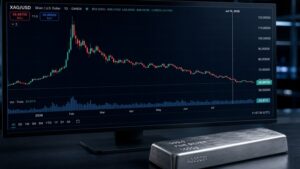
Silver has been one of 2026’s most volatile assets. It surged to an all-time high of $121.67 on January 29 — a gain of more than 140% year-on-year. After that peak, it pulled back sharply, trading between $73 and $82 through early May amid ongoing geopolitical uncertainty. Yet here’s the question most new buyers don’t think to ask: does the form of silver you buy actually matter? It does — more than most people realise. A sterling silver bracelet and a one-ounce silver bar are very different assets with very different economics.
What Is Silver Bullion — and How Is It Different from Jewelry?
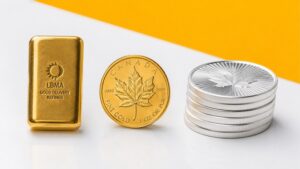
Silver bullion is physical silver made for investment — bars, coins, and rounds at .999 purity or higher. Its value tracks the silver spot price, the live global benchmark traded on exchanges like the COMEX. When you buy a one-ounce bar from a reputable dealer, you’re paying spot plus a dealer premium — typically 5–15% above spot in normal conditions, higher during demand spikes [GoldSilver.com, Silver Spot Price vs Retail: What Investors Need to Know]. Government-minted coins like the U.S. Silver Eagle sit at the higher end of that range. They earn that premium through guaranteed purity, legal tender status, and deep secondary market liquidity.
Silver jewelry, by contrast, is a fundamentally different product. It does contain silver — sterling is 92.5% silver — but the metal is only one line item in its retail price, and rarely the biggest one. By the time a necklace reaches the shelf, labor, design, brand, and retail margin have all been added on top of the metal cost. As a result, markups of 200–300% above raw silver value are standard. What you’re buying is craft and brand, with metal underneath.
Your Gold Buying Guide Most investors overpay when they buy gold. Then overpay again when they sell. This guide shows you exactly what to own — and why.
What Happens to Resale Value — Bullion vs. Jewelry?
Silver bullion resells close to spot. A dealer buys back recognisable bars and coins at the bid price — a few percentage points below spot. Moreover, the spread tightens as silver rises. It’s a narrow, predictable gap.
Jewelry, however, is a different story. A scrap buyer weighs the piece, prices the silver content alone at or below spot, and ignores everything else. For example, a $150 sterling bracelet containing roughly 30 grams at .925 purity holds approximately $72 of silver at current spot prices — less than half what you paid, and that’s before the buyer’s own margin [Silver Recyclers, Sterling Silver Melt Value Calculator]. The labor, the hallmark, the box it came in — none of it counts. There is a narrow exception: Tiffany, Georg Jensen, and rare vintage hallmarks, where brand equity is real and collector demand is proven. Standard retail jewelry, however, doesn’t qualify.
Is Silver Jewelry a Good Investment?
The honest answer: it’s not designed to be, and the numbers show it.
Where jewelry has a genuine case: It’s wearable — you get daily use from it. Furthermore, high-end designer pieces from brands with enduring collector demand can hold value. In parts of South Asia and the Middle East, high-purity silver jewelry sold by weight functions as a legitimate savings vehicle — a tradition with centuries of practical logic behind it.
Where the case breaks down: For most Western retail buyers, the purchase economics are punishing. You pay 200–300% above melt value and can’t recover it. Sterling’s purity is also diluted by copper alloy. The piece is hard to price, hard to authenticate, and slow to sell compared to standardised silver bullion. Additionally, the market itself is moving in the wrong direction — silver jewelry demand is forecast to fall over 9% in 2026 to its lowest level since 2020 [Silver Institute, World Silver Survey 2026]. Falling demand doesn’t make an asset more investable.
Why Do Serious Silver Investors Choose Bullion?
Silver bullion is built for one purpose: to hold silver in the most liquid, transparent form possible. Standardised weights. Guaranteed purity. Recognisable hallmarks that any dealer globally can price on sight.
The fundamental case in 2026 is strong. Specifically, the Silver Institute’s World Silver Survey 2026 projects a sixth consecutive annual supply deficit of 46.3 million ounces — up 15% from the 40.3 million ounce shortfall in 2025. Above-ground stocks have also been drawn down by a cumulative 762 million ounces since 2021 [Silver Institute / Metals Focus, World Silver Survey 2026]. Meanwhile, physical bar and coin demand is forecast to rise 18% in 2026 — the highest level since 2022. That’s the backdrop for buying silver bullion close to spot with a narrow resale spread.
That said, silver bullion isn’t without trade-offs. It has no aesthetic or sentimental value — it sits in a safe. Storage and insurance cost money. Larger bars carry lower premiums per ounce but are harder to partially liquidate. And silver is genuinely volatile: the January 29, 2026 surge to $121.67 was followed by a 35%-plus drop within days. Therefore, anyone buying bullion needs to understand they’re holding a commodity, not a savings account.
Bullion or Jewelry — Which Is Right for You?
The answer depends entirely on what you’re trying to do.
Buying to wear? Jewelry is the right product. Buying to build wealth, hedge inflation, or gain exposure to silver’s supply-demand fundamentals? In that case, silver bullion is the right product — and jewelry is the wrong one. The markup you pay at retail doesn’t come back when you sell. The craftsmanship premium evaporates the moment a scrap buyer puts the piece on a scale. That dynamic doesn’t change regardless of where silver’s price goes.
Moreover, the investment case for silver in 2026 rests on structural deficits, industrial demand from AI infrastructure, EVs, and data centers, and a macro environment that continues to reward real assets [Carbon Credits, Silver in 2026 and Beyond]. None of that case is captured by a sterling silver pendant.
The key is owning silver close to spot, in a form you can also sell close to spot. That means .999 fine silver bullion bars or recognised government coins — not jewelry.
What Drives Silver’s Value Over Time — for Bullion vs. Jewelry?
Bullion’s value driver is simple: the spot price. It’s one variable, tracked in real time. Secondary factors — such as the collectibility of certain limited-mint coins and general market liquidity — matter only at the margins. Silver surged more than 140% in 2025 and hit $121.67 in January 2026 [GoldSilver.com, Silver Price Forecast 2026–2027]. Even after pulling back to the high $70s, silver bullion holders who bought before the surge have been well served by that direct relationship. Consequently, intraday swings of several dollars are now routine — prices should be tracked in real time rather than treated as fixed.
Jewelry’s value drivers, however, are far more complicated: brand equity, condition, provenance, fashion cycles, and melt value all factor in, often pulling in different directions. Most retail pieces depreciate immediately — the 200–300% markup is gone the moment you walk out of the store. Only genuine collector pieces can hold a premium above melt, and identifying them takes expertise most retail buyers simply don’t have.
In short, the gap between what you pay and what the metal is worth — on day one — is the clearest way to see the difference. Understanding how spot price relates to what you actually pay is the starting point for any smart silver purchase.
Stay On Top of Gold & Silver Prices
Get important market alerts sent straight to your inbox.
People Also Ask
What are the key differences between silver jewelry and silver bullion?
Silver bullion is investment-grade silver — bars, coins, and rounds with .999+ purity — priced close to the live spot price with small dealer premiums. Silver jewelry, however, is priced to include labor, design, brand, and retail margins, often 200–300% above the metal’s intrinsic value. It typically contains 92.5% silver (sterling). The two serve different purposes: bullion for wealth preservation, jewelry for aesthetic enjoyment.
Is silver bullion a better investment than silver jewelry?
For investment purposes, yes. Silver bullion tracks the spot price closely and can be resold to any dealer near spot value. Silver jewelry, by contrast, sells at scrap — its metal weight at spot — which is typically less than half its retail price. Unless a piece carries genuine collector demand, jewelry recovers only its melt value on resale.
What factors affect the value of silver jewelry compared to bullion?
Bullion value is driven almost entirely by the spot price of silver. Jewelry value, on the other hand, depends on silver content, brand equity, condition, provenance, and whether a collector market exists. Standard retail jewelry loses most of its purchase price immediately, because retail markups are non-recoverable on the secondary market.
How does the resale value of silver jewelry compare to silver bullion?
Silver bullion resells at or near spot price, with a small dealer spread. Silver jewelry, however, typically resells at scrap — the silver melt value of its metal content — which for a sterling piece at current prices is less than half of what was paid at retail. High-end designer and antique jewelry is the exception, not the rule.
How does silver’s supply deficit affect the case for bullion investing in 2026?
The silver market is heading for its sixth consecutive annual supply deficit in 2026. Specifically, the shortfall is projected at 46.3 million ounces — up 15% from 2025 — according to the Silver Institute’s World Silver Survey 2026, published April 15, 2026. Furthermore, cumulative drawdowns from above-ground stocks since 2021 now exceed 762 million ounces. This persistent structural shortfall supports higher prices over time and strengthens the fundamental case for holding physical silver bullion.
So Which Should You Actually Buy?
Silver jewelry and silver bullion both contain silver. That’s where the similarity ends. If your goal is to wear something beautiful, then silver jewelry does exactly what it’s supposed to do. However, if your goal is to hold silver as a financial asset — to protect purchasing power, hedge against inflation, and participate in a market running its sixth consecutive supply deficit — then the form your silver takes determines most of your outcome. A sterling silver bracelet and a one-ounce silver bar may contain similar amounts of metal. Nevertheless, what you pay for them, and what you can recover when you sell, are worlds apart.
Bullion is purpose-built for what most people asking this question are actually trying to do: own real silver at a fair price, with the ability to sell it at a fair price when the time comes. The retail jewelry markup doesn’t serve that goal. Neither does a scrap buyer who pays half what you paid. Bullion does.
Buying physical silver the right way means transparent pricing, close to spot, from a dealer with a track record. You can create a free account at GoldSilver.com and see exactly what real silver ownership looks like before you spend a dollar.
SOURCES
1. GoldSilver.com — Silver Spot Price vs Retail: What Investors Need to Know
2. Silver Recyclers — Sterling Silver Melt Value Calculator
3. Silver Institute — Global Silver Investment to Remain Strong in 2026 Against the Backdrop of a Sixth Consecutive Annual Market Deficit
4. The Street — The Troubling Silver Supply Problem Most Investors Are Missing
5. Carbon Credits — Silver in 2026 and Beyond: Rising Prices, Solar Substitution, and a Market Still in Deficit
6. GoldSilver.com — Silver Price Forecast 2026–2027: The Bull Case and Bear Case Laid Out
Disclaimer: This article is for informational and educational purposes only. It does not constitute investment advice. Please consult a qualified financial adviser before making any investment decisions.
You may also like:
- Gold and Oil Move Opposite Ways. Here’s Why That Matters
- 7 Timeless Warren Buffett Rules for Gold & Silver Investors
- Gold vs. Bitcoin: Which Hard Asset Will Protect Your Wealth?
- Why Central Banks Sell Gold — And What It Means for Prices
- Why Gold Deserves a Permanent Spot in Your Portfolio
- Silver vs. Gold: A Clear 5-Year Investment Guide (2026–2031)
- $5,500 Gold by Q1 2027? The Central Bank Risk Driving It
- Why Gold Stabilizes — and Silver Amplifies