Silver Rises Over 120% YTD




Published: 03-10-2026, 04:45 pm | Updated: 03-10-2026, 02:49 pm
For most of recorded history, gold has served as money — a durable store of value recognized across cultures and civilizations. It has outlasted empires, currencies, and every financial crisis humanity has thrown at it.
By comparison, today’s everything fiat currency system is a relatively recent chapter in monetary history.
Which helps explain why investors keep returning to the same question in uncertain times: how do I actually buy gold?
With inflation eroding purchasing power, stock markets swinging on headlines, and geopolitical tensions reshaping the global order, the case for owning gold has rarely felt more relevant. But for first-time buyers, the process can still feel overwhelming. Coins or bars? Physical gold or ETFs? And once you own it, where do you store it?
This guide walks through each of those questions step by step — clearly, directly, and without jargon or hype.
Why Do Investors Buy Gold?
Before you buy anything, it helps to understand what you’re buying and why.
Gold plays three distinct roles in a well-constructed portfolio.
- An inflation hedge. When the purchasing power of paper money falls, gold tends to hold its ground. Over long periods, it has preserved wealth through inflationary cycles that eroded the value of savings accounts, bonds, and cash.
- A portfolio diversifier. Gold doesn’t move like stocks or bonds. It follows its own logic — driven by real demand, monetary conditions, and investor sentiment. That independence is exactly what makes it valuable in a diversified portfolio.
- A safe-haven asset. During banking crises, geopolitical shocks, and market panics, investors historically move into gold as a defensive position. It’s one of the few assets that tends to perform when everything else is falling.
That’s why many financial advisors recommend holding 5–10% of a portfolio in precious metals. It’s not speculation. It’s insurance.
The Financial System Isn’t Safer — And You Know It As risks mount, see why gold and silver are projected to keep shining in 2026 and beyond.
Should I Buy Physical Gold or a Gold ETF?
There are two fundamentally different ways to get exposure to gold.
Physical gold means owning the actual metal — coins, bars, or rounds you can hold in your hands. It exists outside the financial system. Gold is unique because it carries no counterparty risk. It can’t be diluted, defaulted on, or frozen. When the banking system is under stress, physical gold is still gold.
That’s not a small distinction. It’s the whole point.
Paper gold — primarily gold ETFs — allows you to gain price exposure through a brokerage account. You’re buying shares in a fund that (in theory) holds gold on your behalf. It’s convenient. It’s liquid. And for certain use cases, it’s a reasonable tool.
But ETF investors typically don’t own specific gold bars. They own a financial claim managed by an institution inside the financial system they may be trying to hedge against. That’s a meaningful trade-off.
At GoldSilver, our view is straightforward: if you want the real benefits of owning gold, own the real thing. Physical bullion is the only form of gold ownership that fully delivers on the asset’s core promise — tangible, independently held wealth that doesn’t depend on anyone else’s solvency.
That said, we’ll cover both options so you can make an informed decision.
Should I Buy Gold Coins or Gold Bars?
Once you’ve decided to buy physical gold, the next question is which form to buy.
Gold coins are minted by sovereign governments and carry official weight and purity guarantees. The American Gold Eagle, Canadian Gold Maple Leaf, and South African Krugerrand are among the most widely recognized bullion coins in the world. Dealers everywhere know them, which makes them easy to sell quickly and at competitive prices.
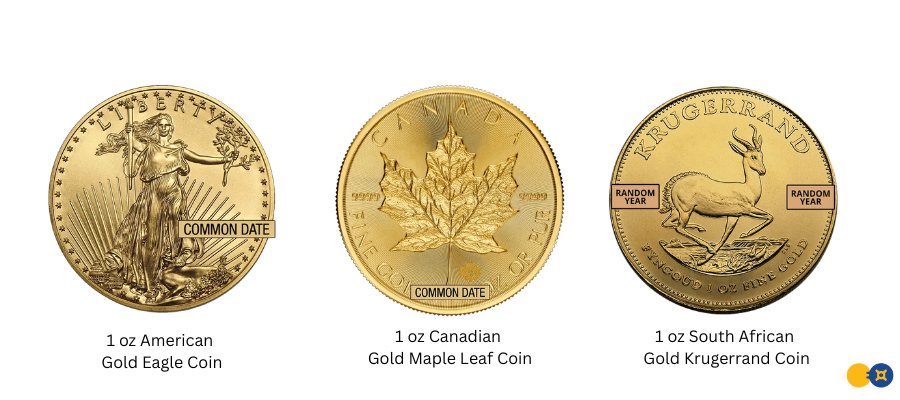
Most sovereign coins like these are available in fractional sizes — quarter-ounce and half-ounce options exist for buyers who want to start smaller or build flexibility into their holdings. Coins are typically the better choice for individual investors who want liquidity. You can sell one coin without liquidating an entire bar.
Gold bars are produced by private refineries and come in sizes ranging from one gram to large institutional formats. Because they’re simpler to manufacture, they generally carry slightly lower premiums over the spot price — meaning less markup above gold’s raw market value. For buyers looking to accumulate larger amounts of gold efficiently, bars are often the more cost-effective option.
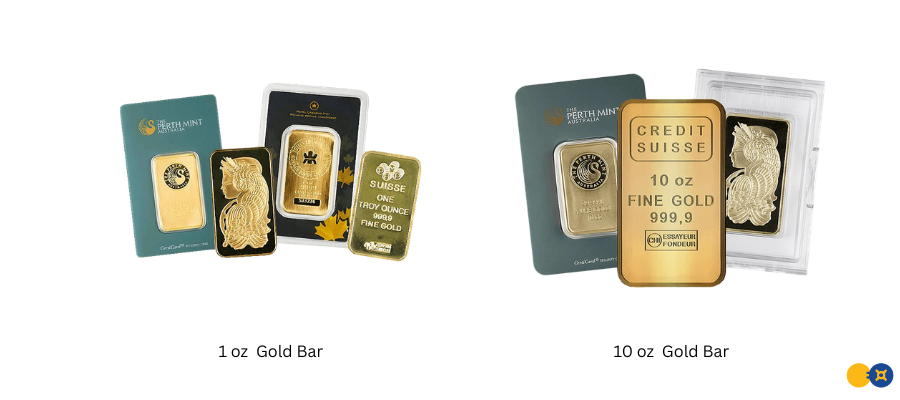
Many investors hold both: coins for liquidity, bars for accumulation. The short version is that you don’t have to choose — but if you’re starting out, coins offer the most flexibility.
How Do I Choose a Reputable Gold Dealer?
The precious metals market is global, but not every dealer operates with the same level of transparency and reliability. Choosing a reputable seller is one of the most important steps in buying gold.
Established dealers clearly disclose their pricing, including the premium charged above the spot price. They offer widely recognized bullion products from major mints and refiners, publish their policies on delivery and returns, and maintain structured buyback programs for clients who eventually choose to sell.
A dealer’s track record also matters. Look for companies with verifiable operating histories, strong customer reviews tied to real transactions, and clear communication around pricing and policies.
Investors should also approach unusually low prices with caution. Gold trades in a highly efficient global market, and prices that appear far below market levels often signal hidden risks. Authenticity guarantees and reputable sourcing are critical when purchasing physical metals.
Where Should I Store Physical Gold?
Once you own physical gold, a practical question follows: where do you keep it?
The simplest answer is home storage. A quality safe puts your holdings within arm’s reach — no fees, no institutions, no counterparties. For investors who want complete control and immediate access, it’s a legitimate choice. Just go in with clear eyes: home storage requires real security measures and adequate insurance. The responsibility lands entirely on you.
Home storage works — until your holdings outgrow it. At that point, most serious buyers turn to professional vault storage. Reputable dealers offer insured, allocated vaulting — your specific coins or bars held in your name, segregated from everyone else’s. Institutional security. Full insurance. Liquidity at the click of a button. It’s the option that lets you own real, physical gold without taking on the burden of protecting it yourself.
GoldSilver offers fully allocated, insured vault storage through trusted global facilities. Your gold is verified, segregated, and yours — whenever you need it.
Common Mistakes New Gold Buyers Make
The mechanics of buying gold are straightforward. But the difference between buying gold and buying it wisely often comes down to avoiding a handful of common mistakes.
New investors often focus on the wrong details — chasing the lowest premium, trying to pick the exact bottom in price, or getting drawn into collectible coins that have little to do with the metal itself.
- Paying numismatic premiums for investment gold. Rare coins derive much of their value from collectibility rather than metal content. Investors seeking gold as a financial hedge usually focus on bullion coins and bars.
- Ignoring the dealer’s reputation. A reputable dealer provides transparent pricing, clear policies, and a track record of reliable service. Saving a small amount upfront isn’t worth the uncertainty of working with an unknown seller.
- Trying to time the market perfectly. Gold reacts to interest rates, currencies, and investor sentiment. Short-term price moves are difficult to predict consistently. Many long-term investors simply build their position gradually.
So if timing the market is a trap, what’s the right way to think about when to buy?
When Is the Right Time to Buy Gold?
Every market invites the same temptation: wait for the perfect price. The problem is that perfect prices are usually only visible in hindsight.
Gold responds to many variables — interest rates, currency movements, inflation expectations, and global risk. Over short periods, those forces are difficult to predict with precision.
Over longer periods, the pattern is clearer. Gold has historically performed best during times of monetary instability, rising inflation, and geopolitical tension.
That’s why many investors treat gold less like a trade and more like a position. Instead of asking “Is this the lowest price?”, they ask: “Do I want to own more gold over the next decade?”
Viewed that way, the goal is straightforward — increase the number of ounces you hold over time.
The investors who benefit most from gold aren’t the best market timers. They’re the ones who already owned it when the environment changed.
How Much Gold Should You Own?
There’s no universal allocation that fits every investor. The right allocation depends on your portfolio size, risk tolerance, and financial priorities.
Many investors begin with 5–10% in precious metals, a range supported by World Gold Council research showing that gold has historically strengthened portfolio resilience and improved risk-adjusted returns.
Some investors increase that allocation when inflation risks rise or when financial markets appear particularly fragile. Others build their position steadily over time.
The specific number is less important than the commitment to building it. Start somewhere. Add to it over time. The goal — as with any long-term position — is to own more of it a decade from now than you do today.
The Bigger Picture
For most of recorded history, gold has served as money — a durable store of value recognized across cultures and civilizations. By contrast, today’s global fiat currency experiment is less than 60 years old.
For modern investors navigating inflation, market volatility, and genuine uncertainty about the financial system, physical gold offers something few financial instruments can replicate: direct ownership of a tangible asset that exists outside the banking and monetary system.
That’s what GoldSilver was built around. It’s why we believe the most meaningful gold ownership is physical — the kind you can hold in your hand, or know is securely stored in a vault with your name on it.
If you’re ready to take the next step, explore our full range of gold coins and bars or speak with one of our precious metals specialists.
Stay On Top of Gold & Silver Prices
Get important market alerts sent straight to your inbox.
People Also Ask
What is the best way for beginners to buy gold?
For most beginners, the best way to buy gold is through widely recognized bullion coins such as the American Gold Eagle or Canadian Maple Leaf. These coins are easy to buy, sell, and verify for authenticity. Many investors start by purchasing from trusted precious metals dealers like GoldSilver, which provide transparent pricing and guidance for first-time buyers.
Is it better to buy gold coins or gold bars?
Gold coins are often better for beginners because they are highly recognizable and easier to sell in smaller amounts. Gold bars typically carry slightly lower premiums, making them attractive for larger purchases. Many investors hold a mix of both depending on their investment size and long-term strategy.
Should I buy physical gold or a gold ETF?
Physical gold gives you direct ownership of the metal and eliminates reliance on financial institutions. Gold ETFs are easier to trade but represent paper exposure rather than ownership of specific gold bars. Investors focused on wealth protection often prefer physical gold purchased through reputable dealers.
How much gold should I own in my portfolio?
Many financial professionals suggest allocating about 5–10% of a portfolio to gold or other precious metals as a diversification strategy. This allocation can help reduce overall risk during periods of inflation or market instability. The right percentage ultimately depends on your financial goals and risk tolerance.
Where should I store gold after buying it?
Gold can be stored at home in a secure safe, in a bank safe-deposit box, or in professional vault storage. Many investors prefer insured vault storage because it provides high security and allocated ownership.
Disclaimer: This article is for informational purposes only and does not constitute investment advice. Past performance is not indicative of future results. Always consult a qualified financial advisor before making investment decisions.