Silver Rises Over 120% YTD


Published: 11-16-2026, 01:47 pm | Updated: 11-16-2026, 01:48 pm
Last verified November 2026.
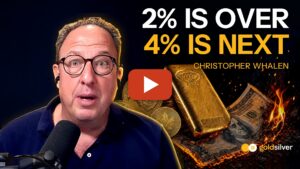
Christopher Whalen is chairman of Whalen Global Advisors. He also edits The Institutional Risk Analyst and writes a column for National Mortgage News. He joined Megan King Diaz on The GoldSilver Show. Gold and silver have both pulled back hard since January. Whalen has used that drop to buy more of both metals. He also thinks the Federal Reserve is quietly headed toward a much higher inflation target.
Key Takeaways:
- Whalen has kept buying gold through its autumn slide and calls the drop “a gift,” not a warning.
- He expects the Fed’s inflation target to drift from 2% toward 4%. He says that pace would erode half a saver’s purchasing power every decade.
- Central banks keep buying gold as the price falls, which he reads that as reserve diversification, not a dollar collapse.
- Only one scenario would make him start selling his metal, and it isn’t a price target.
- Gold trades near $3,864 an ounce and silver near $47 as of November 16, 2026, both well off their January highs [CME, November 16, 2026].
Why Is Christopher Whalen Still Buying Gold as the Price Falls?
Because he thinks most Americans are reading the chart wrong. Whalen says gold doesn’t trade like a stock or a bond, instead It follows its own cycle, often lagging the financial markets by months or even years, and demand outside the United States drive it more than anything on Wall Street does.
He traces the disconnect back nearly a century. Americans, he argues, were taught after the New Deal to treat gold as something other than a financial asset while investors in the Middle East and Asia still think in terms of owning physical metal outright, not paper claims on it.
That is why Whalen calls the autumn pullback “a gift” rather than a problem. He has kept adding to his own gold holdings as the price fell. He even says he hopes to see prices talked down further. Every dip is another chance to buy at a discount.
Whalen also believes that the falling price can be attributed to interest rates finally climbing again after a quiet summer. Rising rates tend to weigh on gold in the short run, but once that adjustment finishes, he expects the older trend to reassert itself.
The Knowledge That Changes Everything
Two essential guides — yours free. Understand why gold matters and why fiat currencies always fail.
Is the Fed Really Headed Toward a 4% Inflation Target?
Whalen thinks so, and he frames it as the real story behind this year’s headlines. He expects the Federal Reserve’s long-standing 2% inflation target to drift toward 4% over time. By his math, that pace would erode half of a saver’s purchasing power every ten years.
He ties the shift to two forces working at once. Kevin Warsh, confirmed as Fed chair in May 2026, now needs to raise short-term rates to establish his own credibility. At the same time, heavy Treasury issuance is pushing long-term rates higher on its own. Whalen ties that issuance to a roughly $2 trillion budget deficit, partly driven by higher military spending.
That combination, in his view, explains why gold has struggled even as the inflation story stays intact. Rising short-term rates make holding cash more attractive for a while. Rising long-term rates reflect the government’s own growing borrowing needs, not a slowdown in the underlying pressure on prices.
Whalen doesn’t expect Washington to change course. Neither party, he says, shows real interest in tackling the deficit, and until that changes, or the economy slows on its own, he expects continued currency debasement. Gold, in his view, is the natural hedge against it.
Why Do Central Banks Keep Buying Gold as the Price Drops?
Because, in Whalen’s description, central banks are “relatively price indifferent” buyers. They aren’t trading around short-term swings the way private investors do. He says many central banks now hold more of their reserves in gold than in dollars. That shift, he expects, will continue.
Whalen frames this carefully as diversification rather than a dollar collapse. As sanctions risk and concern over U.S. fiscal policy have pushed many governments to act, reserves are shifting away from the dollar.
But changing what central banks hold is different from changing how the world trades. The dollar remains deeply embedded in global commerce, making it difficult to replace.
China’s push to settle more trade in yuan or gold reflects that broader search for alternatives, Whalen says. Even so, he doubts other major powers want the economic burdens that come with issuing the world’s dominant currency, including the inflation pressures he associates with that role. Gold offers central banks another way to diversify: they can reduce their dependence on the dollar without relying more heavily on another country’s currency. For Whalen, that is central to gold’s appeal—no single government controls it.
Is Silver Still Money, or Just Another Industrial Metal?
By Whalen’s account, the latter has been true for well over a century. He says silver is “no different than copper” today. Paper currency replaced it as the everyday exchange medium back in the late 1800s. Gold alone remained the monetary asset backstopping the world’s fiat currencies.
That history shapes how he reads silver’s sharp rally earlier this year. He ties the move mainly to industrial and commercial demand and rather than a revival of silver as money. High-tech manufacturing needs the metal, and that need, not monetary demand, is what moves its price now.
Whalen doesn’t rule out a return to silver coinage someday, minted by weight rather than a fixed face value. He just doesn’t expect silver to reclaim a monetary role on its own. People will keep holding it, he says, simply because it’s valuable.
What Would Make Whalen Start Selling His Gold?
Not much. He calls gold a meaningful piece of his portfolio, but not the largest piece. He describes it as one side of a barbell, balanced against fiat assets that can still earn a return.
The one trigger he names is specific: 30% interest rates on Treasury bills. Short of that, he plans to keep adding to his position. When the price falls, as it has this year, he simply buys more. He says he has the ability to hold an illiquid asset through a downturn without needing the cash.
He’s quick to add that his own approach isn’t a template for everyone. Investors who might need to sell on short notice should weigh their cash needs more carefully. His own view on where inflation is headed over the next decade explains why he leans so heavily into gold.
What Does the Full Interview Cover That This Article Doesn’t?
Quite a bit. Whalen is writing a book on the history of gold, titled “Gold, The One Measure,” a phrase drawn from Deuteronomy. In the full conversation, he walks through a 1964 Federal Reserve document on gold’s pre-New Deal history. He also covers Germany’s costly switch off silver in the 1870s. Andrew Jackson’s push to flood the country with gold coins gets its own segment.
He also puts a number on what gold might fetch if the U.S. revalued its official reserves today. He explains why Britain’s 1821 return to the gold standard worked. Germany’s own attempt, decades later, did not. None of that detail made it into this summary. It’s covered start to finish in the interview below.
People Also Asked
He says gold follows its own cycle and tends to lag financial markets by months or years. He calls the current pullback “a gift” and has kept adding to his position through it. The broader uptrend, he expects, will soon resume.
Christopher Whalen believes the Federal Reserve’s 2% inflation target will eventually drift toward 4%. He points to a roughly $2 trillion budget deficit and heavy Treasury issuance as the underlying drivers. Neither depends on any single geopolitical event.
Why do central banks keep buying gold even as the price drops?
Whalen describes central banks as “relatively price indifferent” buyers diversifying reserves away from the dollar, partly over sanctions risk. He says many now hold more gold than dollars in reserve, which he expects to continue.
Whalen doesn’t think so. He calls silver “no different than copper” today, a commercial metal tied to high-tech manufacturing demand. Silver lost its monetary role back in the late 1800s.
Watch the Full Interview
Christopher Whalen’s full conversation with Megan King Diaz covers his case for a $4,000 gold revaluation. You’ll hear exactly what it would take to change his mind on metals. Watch the complete interview below.
Watch the full interview with Christopher Whalen on The GoldSilver Show
SOURCES
1. CBS News — What Is the Highest Gold Price in History?
2. FindBullionPrices — Silver Already Hit $100: Here’s Why It’s Going Higher
3. NPR — Senate Confirms Kevin Warsh as Next Chair of the Federal Reserve
4. BNN Bloomberg (Reuters) — US Fiscal 2026 Budget Deficit Rises to US$1.99 Trillion, Largest in 5 Years
5. Yahoo Finance — Gold Surpasses US Treasurys as Top Central Bank Reserve Asset
6. IMF Finance & Development — Gold, Silver, and Monetary Stability
7. Seeking Alpha — Christopher Whalen (Author Bio)
Disclaimer: This article is for informational purposes only and does not constitute investment advice. Past performance is not indicative of future results. Always consult a qualified financial advisor before making investment decisions.
You May Also Like:
- Gold Fell After Hot CPI. What Does Trey Reik Watch Instead?
- Physical Gold vs. Gold ETF vs. Mining Stocks: Which Fits You?
- Michael Oliver: Is Gold’s 29% Drop Just Like 2008?
- Gold Broke $4,000. The Fed Just Proved Him Right.
- Why Isn’t Gold at $6,000 Yet? Gerald Celente Explains
- Peter Grandich: What Happens to Gold When Stocks Fall?
- Peter Grandich Sold Gold, But He’s Buying On the Dip
- Ronnie Stoeferle’s $8,900 Gold Forecast Comes With a Warning